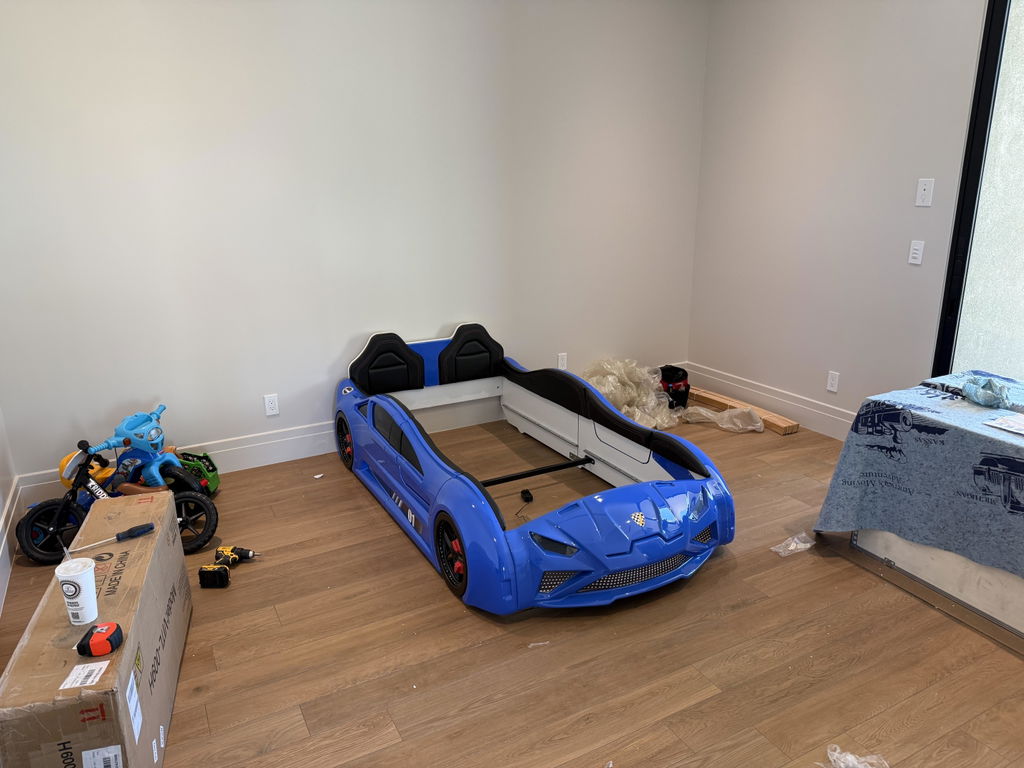
Creating a fun and functional bedroom for your child often starts with choosing an exciting bed design. Popular options like a race car bed twin bed spark imagination while delivering a cozy sleep environment.
However, the hidden foundation of your child's twin bed plays a massive role in their overall comfort and the lifespan of their mattress. Whether you choose slats or a box spring directly impacts how well the bed supports your growing child's body.
In this guide, we break down the pros, cons, and essential details of slats versus box springs to help you make the best decision for your child’s sleep setup.
Understanding Twin Bed Support Requirements

Proper mattress support is essential for comfort and durability. The right foundation maintains structural integrity, prevents premature sagging, and keeps the spine aligned overnight.
Types of Foundations
When setting up twin beds, parents primarily choose between two support types:
- Slats: Horizontal planks made from wood or metal, spaced evenly to offer consistent, breathable support.
- Box Springs: A traditional outer frame (wooden or metal) covered in fabric, sometimes containing inner coils, built primarily for standard innerspring mattresses.
Weight Distribution & Strength Matters
A well-engineered foundation provides two major benefits for high-energy kids:
- Even Weight Distribution: Eliminates pressure points and significantly extends mattress life.
- Strength & Stability: Essential for safety and resilience, ensuring the frame handles active kids who might jump on the bed.
Do you need a box spring for a twin bed? It depends on the mattress type. While a twin bed box spring adds height, it may not offer optimal support for modern memory foam or hybrid options.
Bed Slats: The Versatile Choice for Twin Beds

Bed slats are strong planks arranged horizontally across the bed frame. They establish a solid, flat surface that holds the mattress evenly, ensuring it retains its shape over years of use.
Comparing Wooden vs. Steel Slats

Wooden Slats
- Natural Flexibility: Offers a subtle give that enhances overall sleep cushioning.
- Aesthetic Appeal: Features a traditional look that complements most bed structures seamlessly.
- Cost-Effective: Highly affordable option for budget-conscious families.

Steel Slats
- Maximum Durability: Provides unmatched long-term strength compared to wood.
- Higher Weight Limits: Handles higher weight capacities without bending or snapping.
- Modern Design: Adds a sleek, sturdy component to contemporary frames.
Slat Spacing Is Key
To deliver ideal support, slats should ideally be placed 2 to 2.75 inches apart. Proper spacing ensures:
- Zero Sagging: Prevents the mattress from sinking between gaps over time.
- Enhanced Airflow: Allows air to circulate freely beneath the bed, dissipating heat and moisture.
Benefits of Using Slats in Twin Beds

- Prevents Sagging & Improves Ventilation: Slats distribute weight across the frame evenly. The open spacing lowers humidity accumulation, keeping the mattress fresh.
- Budget-Friendly & Easy Assembly: Compared to heavy box springs, twin bed slats are economical and quick to install. Many modern themed frames ship with pre-assembled slat systems.
-
Broad Mattress Compatibility:
- Memory Foam: Firm slat support keeps foam layers flat and prevents sinking.
- Innerspring & Hybrid: Provides a sturdy base for internal coil systems.
For parents deciding between support systems for a twin bed, slats provide a complete package of affordability, breathability, and structural longevity.
Box Springs: A Traditional Option for Twin Beds

Box springs consist of a covered frame historically filled with internal springs designed to absorb movement. A traditional twin bed box spring elevates the mattress profile, making it easier for children to climb in and out.
Pros and Cons of Box Springs
Advantages
- Height Elevation: Box spring height benefits help small children reach their bed easily without straining.
- Extra Bounce: Works smoothly with traditional innerspring beds to provide a springy feel.
- Shock Absorption: Helps cushion impact to preserve older innerspring mattress designs.
Disadvantages
- Bulkiness: Difficult to maneuver, transport, or clean around during room reconfigurations.
- Inadequate Foam Support: Fails to supply the flat, rigid surface required by modern memory foam or latex mattresses.
- Compatibility Constraints: Most modern kids' frames (including low-profile themed beds) are engineered specifically for slats without needing a box spring.
Note on Frame Support: If you use a box spring on a standard frame, ensure it is paired with heavy-duty steel side rails to maintain frame integrity and support the weight reliably over time. Learn more about whether kids' beds need box springs.
Making the Right Choice: Slats or Box Springs?
To select the best setup for your child, evaluate how the bed foundation matches your chosen mattress type:
- Choose Bed Slats if you plan to use a memory foam, latex, or hybrid mattress, desire optimal airflow, or own a specialty low-profile frame like a race car bed. Read our detailed twin bed slats guide for additional details.
- Choose a Box Spring if you are using an older innerspring mattress, prefer extra height, or are utilizing a traditional metal bed frame without built-in slats. Review expert insights on twin box springs.
How to Fix Sagging Box Springs in Twin Beds
If you are currently using a box spring that has started to sag due to age, wear, or weight, consider these effective solutions:
- Bunkie Boards: Add a thin, ultra-firm wooden bunkie board directly between the sagging box spring and the mattress to create a flat, supportive base instantly.
- Slat Conversion: Replace the aging box spring entirely with a sturdy slat conversion kit to restore strong, ergonomic support.
Conclusion
Selecting the right support system for your twin bed is essential for mattress durability and sound sleep quality. Slats provide unmatched versatility, breathability, and stability—making them the ideal choice for modern kids' beds and foam mattresses. Traditional box springs still offer value when extra height is needed for standard innerspring configurations.
Investing in a solid foundation yields better sleep quality and supports healthy growth for your child. Explore our collections, including the exciting Lambo RX twin bed, to find the perfect sleep setup today!