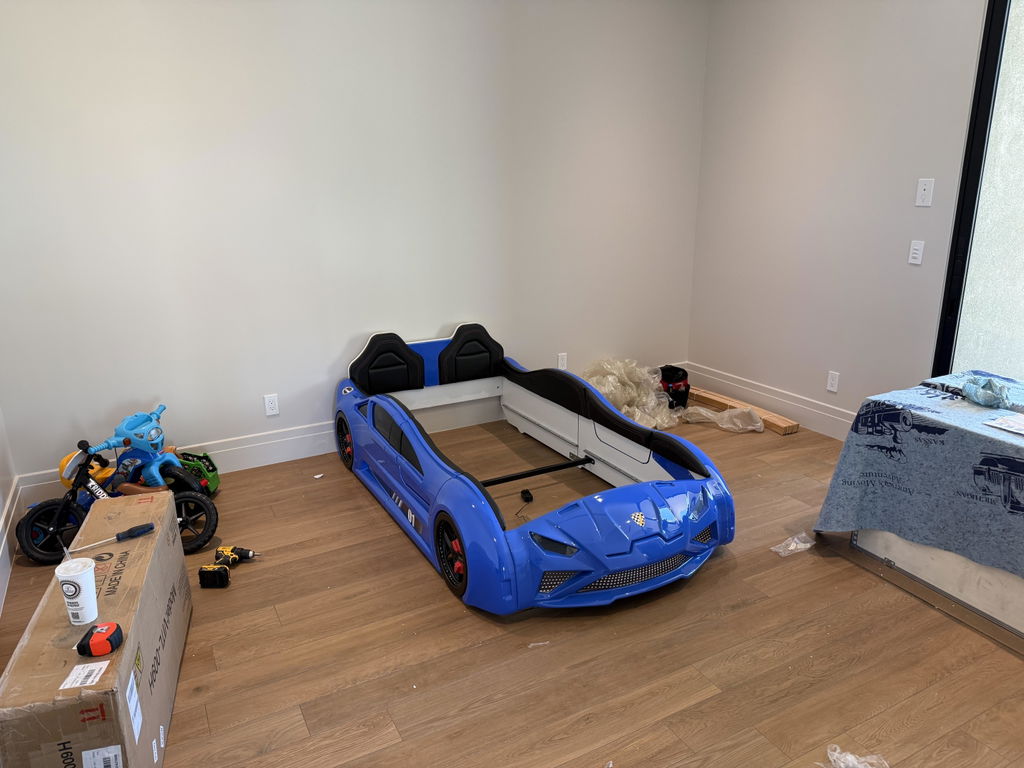
Race car beds were first invented in the early 1960s as a novelty solution to encourage children to stay in bed at night. Designed with steering wheels, dashboards, and painted headlights, these iconic beds transformed bedtime routine struggles into imaginative play.
🏁 Historical Fact: Originally handcrafted from wood in the 1960s and 70s, race car beds experienced a massive resurgence in the early 2000s thanks to modern molded plastics and luxury sound/light integration.
1. The History & Evolution of Vehicle Beds
The Wooden Classics
Made primarily of solid wood with painted side panels, physical steering wheels, and built-in horns to spark early childhood pretend play.
Shift to Plastic
Molded plastic and metal frames emerged, introducing smoother curves and lighter weight options across retail stores.
Modern Supercars
Features ultra-durable ABS plastic, remote-controlled LED headlights, engine sound effects, and full twin/full sizing for long-term use.
2. What to Look for in Today's Race Car Beds
Today's race car beds go far beyond basic novelty—offering durable construction, long lifespan, and built-in safety features:
- Non-Toxic Materials: Look for beds made from medical-grade, non-toxic ABS plastic that is BPA and lead-free (like those at RaceCarBeds.com).
- Built-In Safety Side Rails: High raised side panels act as natural guardrails to keep active sleepers secure through the night.
- Long-Lasting Size & Capacity: Quality full size race car beds support up to 300 lbs and accommodate kids from age 3 up to 12.
- Interactive Features: Wireless remote controls, working LED headlights, and realistic engine revving sounds add excitement to bedtime routines.
3. Key Features of a Great Race Car Bed
Parent Essentials
Low profile design for easy entry/exit, rounded edges to prevent bumps, and sturdy wooden slat support systems for proper mattress support.
Racer Delights
Remote-controlled headlight modes, wheel rim lighting, and sound modules turn every night into a championship race finish!